
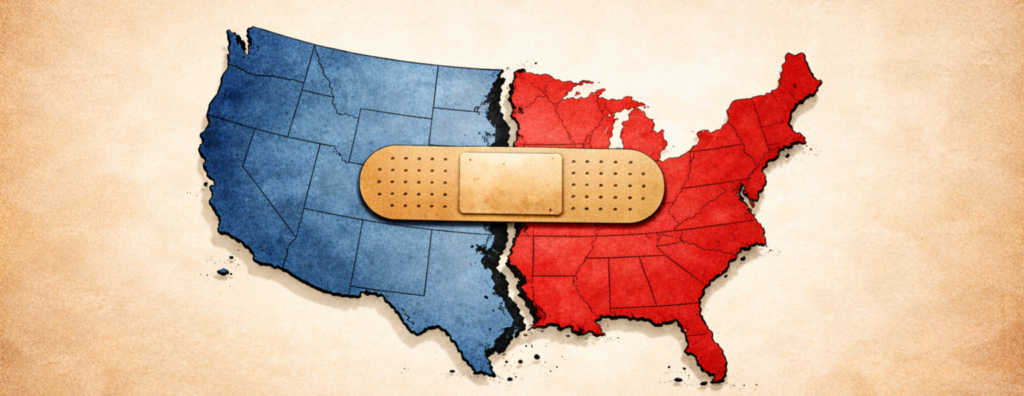
Political divisions in the U.S. and many democracies are no longer just about policy differences; they are increasingly rooted in affective polarization—mutual dislike and suspicion between groups. Polarization is now directly linked to institutional dysfunction. Yet depolarization research is showing that interventions such as structured dialogue, narrative exchange, and media literacy can counter these dynamics.
The 2026 DeLTA Summit: Emerging Scholarship on Polarization will showcase pieces of a needed toolkit for addressing polarization that is finally robust enough to warrant coordinated, cross-disciplinary action. The DeLTA Summit offers a forum for students at all levels to present research related to political polarization and interventions to an audience of their peers as well as a panel of conflict resolution faculty around the DC area.
Come to the Summit
The 2026 DeLTA Summit: Emerging Scholarship on Polarization is timely because the polarization has intensified, the consequences are clearer, and—critically—the toolkit for addressing polarization is finally robust enough to warrant coordinated, cross-disciplinary action. Learn about emerging scholarship that will make a difference. Hosted by DANIEL ROTHBART, Druscilla French Chair of Conflict Analysis & Resolution, Director, Peace Lab, Polarization & Violence Transformed (PiVoT), George Mason University and RANDY LIOZ, Manager, PiVoTPeace Lab & Adjunct Professor, George Mason University.
Tuesday, May 12, 2026
10 am – 2 pm
Mason Square, Van Metre Hall
3351 Fairfax Drive Arlington, VA
Register here.
PROGRAM
9:15 AM | REGISTRATION
Light breakfast available to in-person attendees
10:00 AM |WELCOME ADDRESS & PANELIST INTRODUCTIONS
10:20 AM | STUDENT PRESENTATIONS
Oakley Thomas Hill | Tali Greenfield | Sadie Lockhart | Cece Foye | Jamie Sackett | Denny Mitchell | Silvestre A. Acedillo | Olivia Jacobson
Lunch available to in-person attendees
1:30 PM | FILM DISCUSSION
Flood, Directed by Katy
FACULTY PANEL
BABAK BAHADOR, Associate Research Professor & Director of the Media and Peacebuilding Project, George Washington University
DANIEL BRUMBERG, Associate Professor of Government, Georgetown University
PASHA DASHTGARD, Director of Interventions for the Polarization and Extremism Research & Innovation Lab (PERIL), American University
KARINA KOROSTELINA, Professor of Conflict Analysis and Resolution, Carter School, George Mason University
ANITTI PENTIKAINEN, Director, Mary Hoch Center for Reconciliation, Carter School, George Mason University
STUDENT PRESENTATIONS
NAOMI AUSTIN, Learning from Global Minority‑Housing Successes: A Comparative Study to Address Structural Violence & Implementation Gaps in Ireland’s Traveller Accommodation System, George Mason University
CECE FOYE, Dialogue & Difference: Intergroup Contact, George Mason University
TALI GREENFIELD, The Roots of Intractability: A Path Forward for Israel/Palestine, Washington University of St. Louis
OAKLEY THOMAS HILL, Moral Polarization And The Justice Languages of America, George Mason University
OLIVIA JACOBSON, Parties in the USA: The Impact of Political Party Affiliation Strength and Party Alignment on
Perceptions of Bipartisan Candidates, Roslyn High School
SADIE LOCKHART, Community Dialogue to Cultivate Belonging: Depolarizing and De-escalating Violence Around Immigration in the United States, George Mason University
DENNY MITCHELL, Leadership as Process Stewardship: A Model for Scaling Depolarization Through Inclusive Leadership in Polarized Contexts, Pepperdine University
JAMIE SACKETT, SILVESTRE A. ACEDILLO, & SADIE LOCKHART, Digital Authoritarianism and the Erosion of Democratic Norms, George Mason University
JAMIE SACKETT, Acknowledgment as a Precursor to Inclusive Urban Planning, George Mason University
Questions? Contact Randy Lioz at [email protected].
Learn about last year’s summit here.The Summit is sponsored by the PiVot Peace Lab, a space for students, scholar-practitioners, academic researchers to dive deeply into polarization and violent conflict from multiple perspectives. Lab members examine why it has surged, and how to transform conflicts by mitigating and possibly reversing the damage these trends have caused. Learn more (and join) here.